PROGRAMME EN COURS DE FABRICATION
Pour ajouter un évènement à la programmation,
ou mettre un lieu, du matériel ou un logement à disposition,
envoyer tous les détails à cette adresse :
le-fab@riseup.net
Si vous avez besoin d’un lieu pour accueillir un évènement, de matériel pour l’organiser ou d’un logement pour des potes, jetez un œil ici :
11 juillet
Concert de «ladr ache» dans le cadre du PleinOPENair – par ladr ache
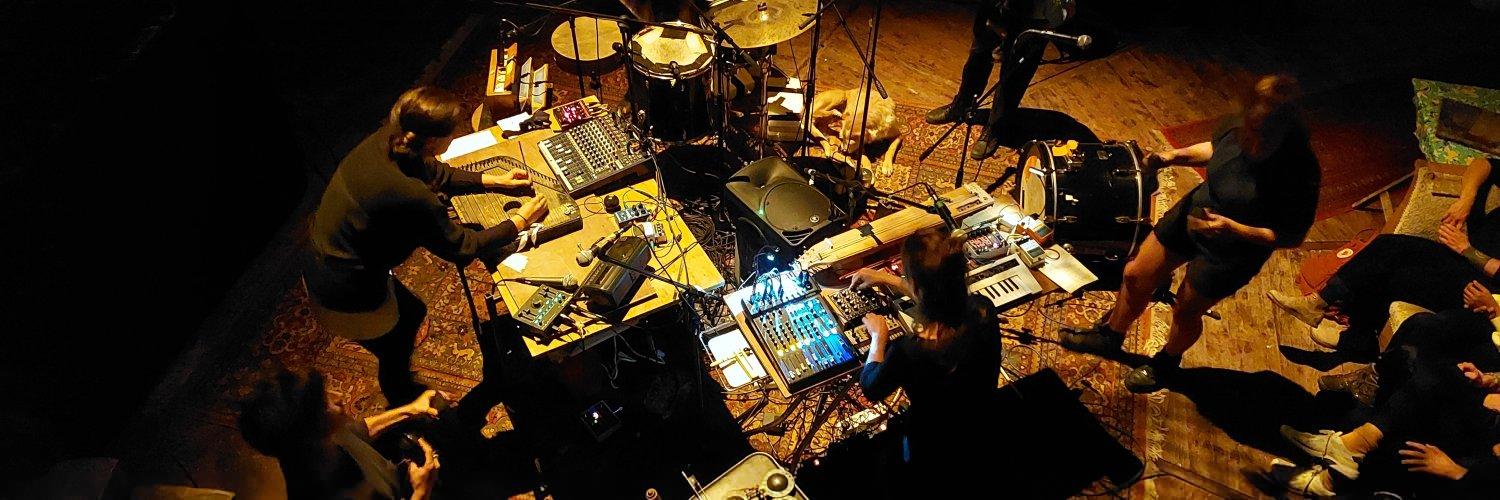
ladr ache déploie une musique en mouvement constant, faite de frottements, d’élans et de trajectoires non linéaires. Le groupe, formé de six forgeronnes du son, nous invite à une expérience circulaire qui se glisse dans les fissures pour laisser apparaître des motifs inspirés de traditions sans frontières, portés par des gammes hybrides, des langues imaginaires et des pulsations machiniques qui battent puis déraillent. Ça avance par secousses, par boucles, par accidents heureux. Sur scène, ladr ache compose une matière sonore dense et poreuse, où l’intime se mêle au collectif, où les machines semblent respirer et les silences peser autant que les saturations. Une forme de rituel instable se construit peu à peu : fragile, physique, habitée.
ÉCOUTER : https://soundcloud.com/ladrache
Le 11 juillet 2026, à partir de 20h30, au stade Verdonck (rue Léopold De Swaef 23 à Anderlecht).
15 juillet
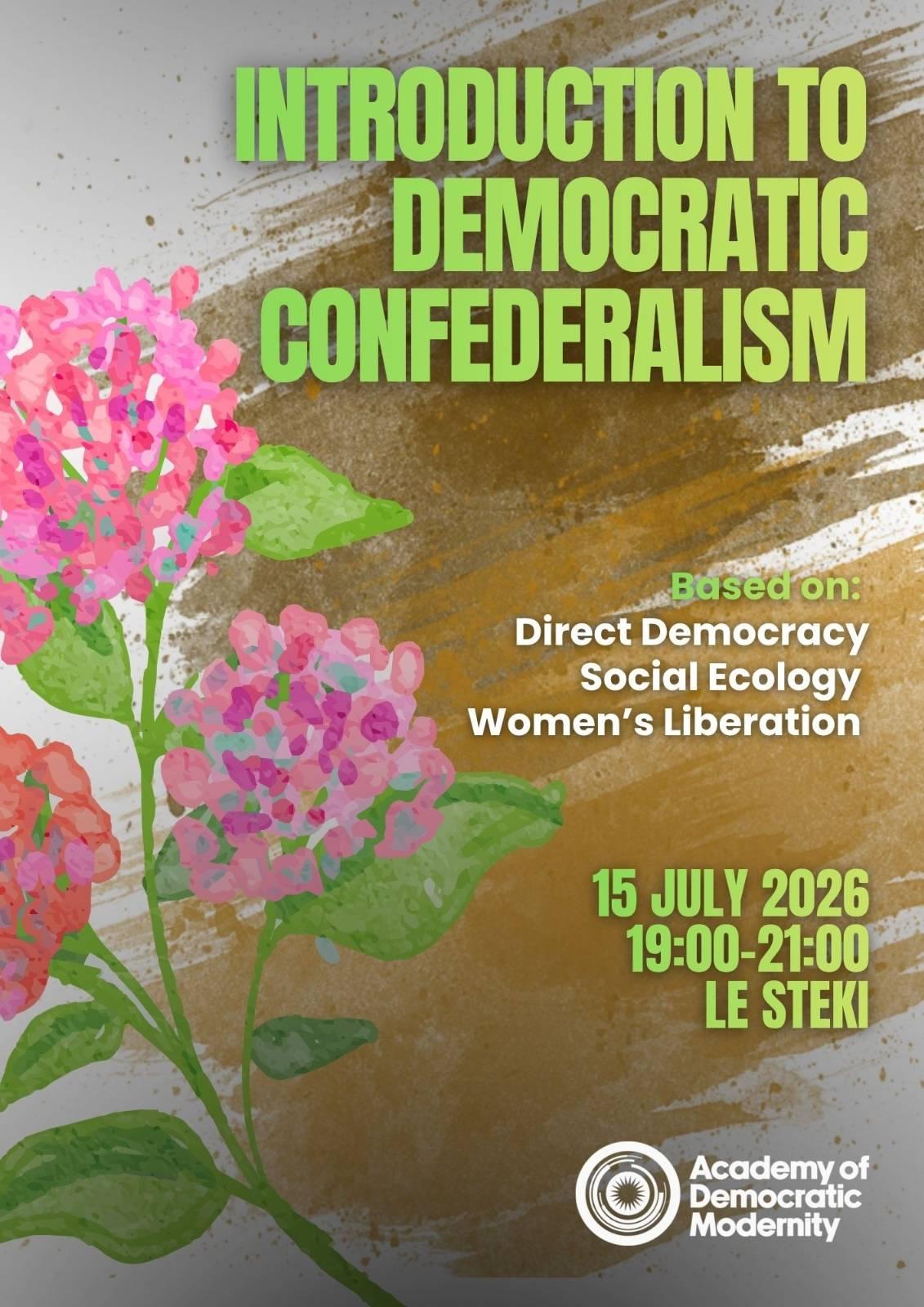
Introduction to democratic confederalism / Introduction au confédéralisme démocratique – par ADM
[ENG BELOW]
En tant qu’ADM (Academy of Modern Democracy) nous souhaitons offrir un espace de discussion, d’organisation et de lutte.
Tout comme un changement social fondamental est inconcevable sans la mise en place de l’organisation nécessaire, l’organisation n’est rien sans un fondement théorique cohérent et solide. Il est donc nécessaire d’intensifier la critique de l’ordre établi, d’envisager des alternatives, de nous former et de nous organiser en conséquence.
Nous ne nous intéressons pas seulement à l’analyse théorique, mais aussi à un changement de mentalité, d’attitudes et, par là même, à un changement social. En cette période de crise de la modernité capitaliste, nous souhaitons réfléchir à la construction et à la recherche d’une alternative ici et maintenant, fondée sur la démocratie radicale, l’écologie et la libération des femmes.
C’est pourquoi nous vous invitons à suivre une introduction au confédéralisme démocratique, afin de pouvoir lutter ensemble dans le futur.
Mercredi 15 juillet : 19h-21h
Le Steki,
Rue Gustave Defnet 4-6
1060 Saint-Gilles
GRATUIT
[ENG]
As ADM we want to provide a platform to discuss, organize and struggle. Just as fundamental social change is inconceivable without building the necessary organization, organization is nothing without a coherent and solid theoretical foundation. It is therefore necessary to intensify the critique of the existing, to think alternatives, to educate ourselves and to organize according to that.
We are not only interested in theoretical analysis, but in a change of thinking, of attitudes and thus in a social change. In a time of crisis of capitalist modernity we want to discuss about building up and seeking for an alternative in the here and now on the basis of radical democracy, ecology and women’s liberation. For this we want to invite to an introduction in democratic confederalism, so that we can struggle together in the future.
Wednesday 15 july : 7pm-9pm
Le Steki,
Rue Gustave Defnet 4-6
1060 Saint-Gilles
FREE
Présentation complète de l’évènement : ici
∼
Projection du documentaire « Retour vers nos futurs » –
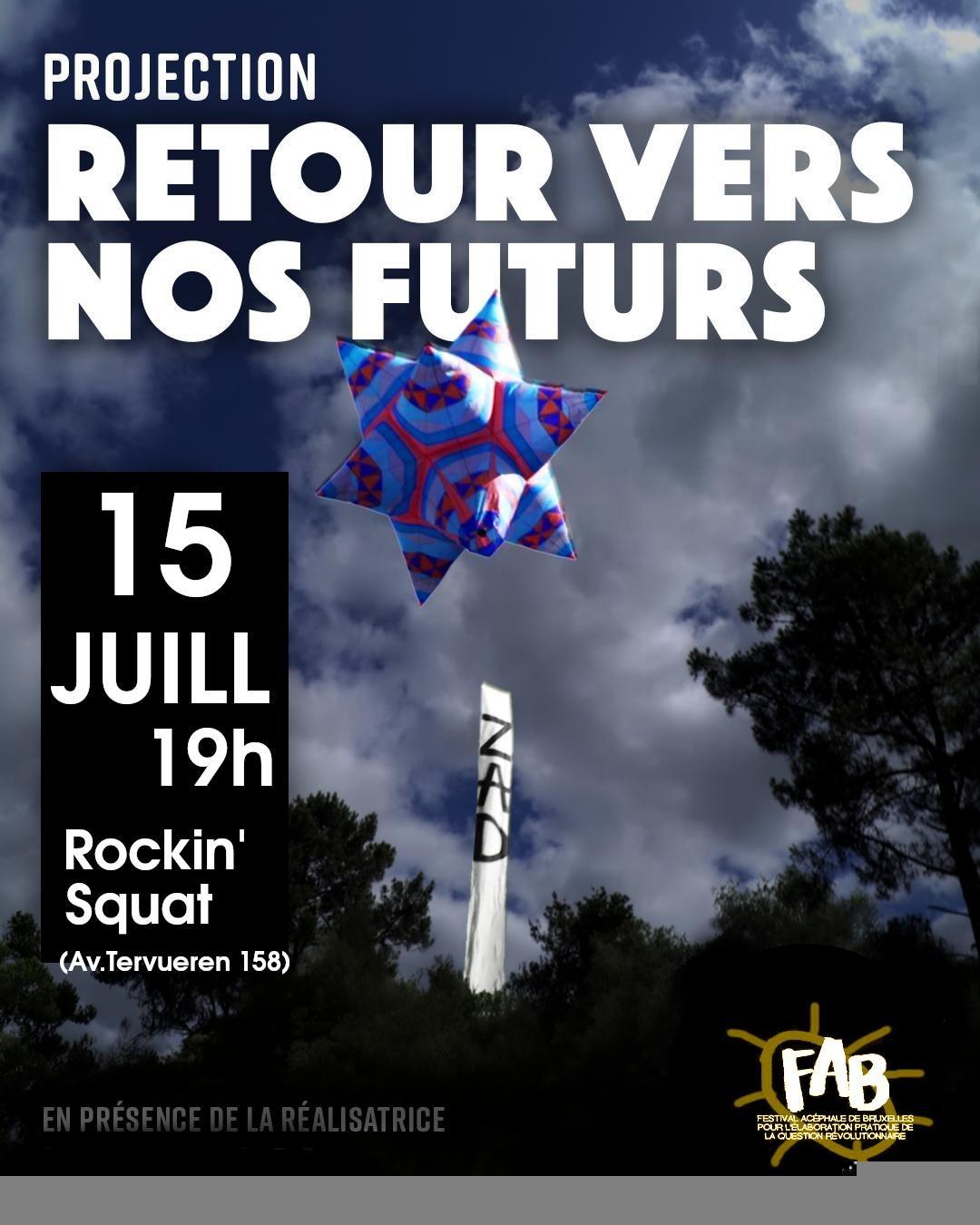
L’auto-détermination d’un territoire hors de l’emprise de l’État, ça ne va pas de soi. C’est ce que plusieurs centaines de personnes ont intensément expérimenté à la ZAD de Notre-Dame-des-Landes pendant six ans, jusqu’à leur victoire contre un projet d’aéroport.
Une quinzaine d’entre elles, qui ont fait le choix de rester vivre dans le bocage, se souviennent : sous l’unité de façade, ce n’était pas si simple.
Comment concilier l’usage des terres, quand pratiques et aspirations sont en partie contradictoires ?
Comment appréhender les situations de violence sans avoir recours aux institutions traditionnelles ?
Comment s’entendre sur de nouvelles formes sociales, quant l’urgence de répondre aux menaces prend tant de place ?
Comment faire durer ces usages quand les marges de manœuvre s’amenuisent ?
Il n’y a pas de réponses définitives à ces questions, mais les tentatives de ces années-là peuvent en aiguiller d’autres. C’est la raison d’être de ce film.
En présence de la réalisatrice.
Retour vers nos futurs, 1 h 57 min, Despina M. – 2025 (Belgique)
Le 15 juillet 2026, à partir de 19h, à Rockin’ Squat (avenue de Tervueren 158, à Woluwe-Saint-Pierre).
16 juillet
[ATELIER] Outils numériques : HIPPO, une application simple et efficace mais en chantier – par LAN
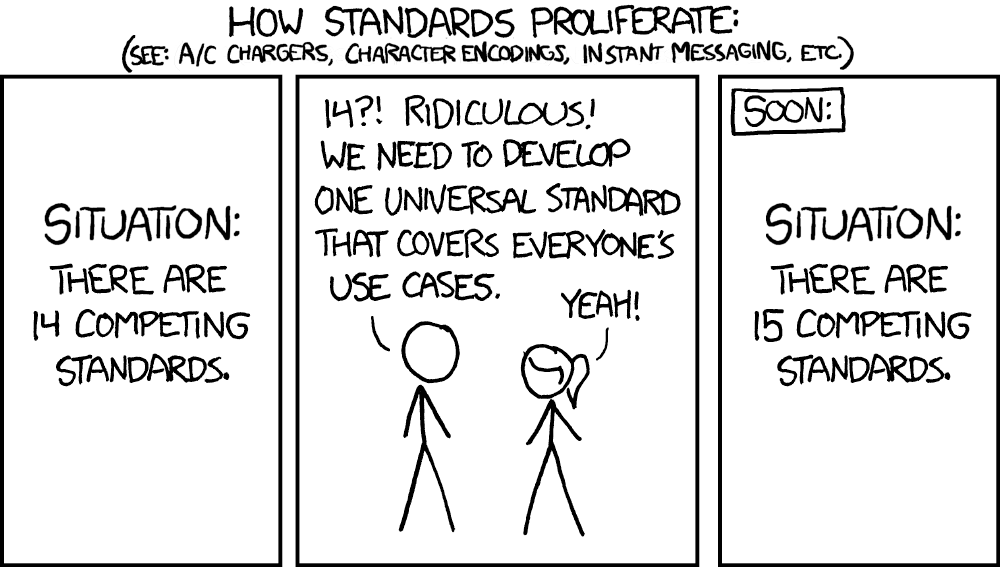
Dans la perspective d’établir un processus d’autonomisation croissante et de « sécession numérique » à l’échelle de la ville (puis au-delà), nous proposons ici de prendre l’affaire par un bout : optimiser ces moyens d’organisation – dont nous sommes nombreuses à faire abondamment usage dans différents contextes – que sont la communication et le partage de fichiers (et autres types d’information) via l’Internet.
L’enjeu est de fabriquer et proposer un outil plus accessible, plus pratique, plus rapide. Une application qui combine et articule principalement deux logiques :
— d’un côté, une structuration en profils « solistes » et « groupaux » – disons des personnes et des groupes (sous-groupes, coalitions, etc’) – qui peuvent communiquer et agir en tant que tels (soliste <-> soliste, soliste <-> groupe, groupe <-> sous-groupe, etc’) ; 
— de l’autre, un ensemble d’espaces partagés par ces profils, et composés de diverses modules – courrier (≃ e-mail), flux (≃ Instagram), messagerie (≃ Signal), et systèmes de fichiers (≃ NextCloud) et autres outils (≃ Framatrucs) – intégrés ou externes.
Cet atelier est destiné à approfondir les réflexions quant aux fonctionnalités prioritaires, aux multiples logiques internes et aux usages à favoriser. Il prolonge l’enquête faite auprès de différentes personnes et groupes afin de situer les pratiques et les besoins.
Si la proposition vous intéresse, c’est une occasion d’en savoir plus, de proposer des orientations sur base de vos usages, de partager vos expériences et frustrations en la matière, de comparer différentes hypothèses…
Aucune connaissance en informatique n’est nécessaire pour prendre part à l’atelier. Nous nous focaliserons sur l’interface et les principaux éléments décrits ci-dessus, et laisserons les inquiétudes quant aux protocoles de chiffrement, les considérations sur les réseaux fédérés et la spéculation au sujet des modèles de menace et des chaînes de confiance pour les palabres en fin de soirée. D’autres moments seront dédiés à ces questions qui devraient être plus spécifiquement prises en charge par une initiative complice : « qqo-opp » (voir ici).
Voici le programme :
(Accueil buvette à 18h20)
19h — Rapide historique et présentation générale d’« HIPPO » (et survol de « qqo-opp »).
20h — Exploration et discussion, « par couche », des logiques principales et des éléments de base.
21h — Palabres moins solidement cousues sur les prochaines étapes, les difficultés et les besoins (et, pour qui veut, sur les protocoles de chiffrement).
labautonum@riseup.net
___________
Proposé dans le cadre du Festival Acéphale de Bruxelles… (blablabla), cet atelier est pensé comme un moment de contradiction et d’élaboration, sur base d’hypothèses pratiques, de ce que pourrait être un outils approprié pour nous organiser à distance aux échelles locale et, conjointement, transnationale dans un contexte de moins grande dépossession.
17 juillet
[PRÉSENTATION] Outils numériques : Devenir invisible sur l’Internet avec NymVPN / Becoming Invisible on the Internet with NymVPN – Nym & LAN
[FR↓]
Nym is the first decentralized noise-generating mixnet to provision real-world network anonymity to Internet users even against nation-state adversaries. The aim here is to supersede existing VPNs in order to fight increasingly more powerful authoritarianism and surveillance.
Unlike traditional centralized VPNs that can be de-anonymized by a global passive adversary – like the NSA – based on their traffic patterns, Nym adds noise (“cover traffic”) to existing Internet communications. Similar to Tor, Nym routes each packet separately over a decentralized network of servers, but unlike Tor, mixes traffic and adds noise at each hop. After five years of coding, NymVPN is ready to be used by anarchists. NymVPN is an easy to use app for all major operating systems that makes using the Nym network as easy as using a traditional VPN for ordinary people, with both a “fast” and “anonymous” mode. The “fast” mode features speeds comparable to centralized VPNs using the same decentralized network as the mixnet, but without mixing. Via the SDK, the Nym mixnet remains free to use by hackers to build the next generation of privacy infrastructure.
Nym est le premier réseau décentralisé à génération de bruit offrant un anonymat réel aux internautes – plus que Tor – même face à des adversaires étatiques. Son objectif est de remplacer les RPV existants pour lutter contre l’autoritarisme et la surveillance.
Contrairement aux RPV centralisés traditionnels, qui peuvent être démasqués par un adversaire passif mondial – comme la NSA ou Palantir – grâce à l’analyse de leur trafic, Nym ajoute du bruit (« trafic de couverture ») aux communications Internet. À l’instar de Tor, Nym achemine chaque paquet individuellement sur un réseau décentralisé de serveurs, mais contrairement à Tor, il mélange le trafic et ajoute du bruit à chaque saut. Après cinq ans de développement, NymVPN est prêt à être utilisé par les anarchistes. NymVPN est une application conviviale pour tous les principaux systèmes d’exploitation, rendant l’utilisation du réseau Nym aussi simple que celle d’un RPV traditionnel, avec deux modes : « rapide » et « anonyme ». Le mode « rapide » offre des vitesses comparables à celles des RPV centralisés utilisant le même réseau décentralisé que le réseau mixte, mais sans mélange de trafic. Grâce au SDK, le mixnet Nym reste accessible gratuitement aux hackers pour construire la prochaine génération d’infrastructures de confidentialité.
___________
Proposée par le réseau «Nym» et organisée par le LAN, cette rencontre prend place dans le cadre du FAB.
La présentation sera assurée par Casey et Harry, et fera appel à des connaissances en informatique qui nécessitent d’être sommairement familière avec le fonctionnement des RPV, de TOR, etc’.
(Si nécessaire, une traduction EN↔FR sera prévue.)
Le 17 juillet 2026, de 19h à 21h, au Steki (rue Gustave Defnet 4-6 à Saint-Gilles).
18 juillet
Solidarité et hommage à la mémoire des prisonnier·es politiques exécuté·es en Iran – par SR & Collectif révolutionnaire Femme, Vie, Liberté – Belgique
« Chaque exécution rappelle le massacre de l’humanité.
Chaque exécution rappelle l’anéantissement de l’être humain.
Et chaque exécution rappelle la poursuite d’une lutte irréconciliable contre l’oppression !
Non aux exécutions et à la torture des prisonnier·ère·s politiques !
Non à la République islamique d’Iran !
Non à la guerre d’agression impérialiste ! »
Le 18 juillet, le Secours Rouge et le Collectif révolutionnaire Femme, Vie, Liberté – Belgique vous invitent à participer à l’évènement organisé au local Sacco-Vanzetti pour la commémoration des massacres des prisonnier·es politiques perpétrés par le régime de la République islamique d’Iran (depuis son accession au pouvoir jusqu’à aujourd’hui).
Un hommage sera organisé, aux côtés des survivant·es des massacres politiques, d’ancien·ne·s prisonnier·es politiques ainsi que de militant·es politiques internationalistes, antiguerre et opposé·es à la République islamique d’Iran, pour exprimer notre solidarité avec les familles des prisonnier·es politiques en Iran et faire entendre leur voix.
- Programme :
- De 16h à 17h30 : Exposition de photographies et projection de films.
- De 17h30 à 18h : Ouverture de la cérémonie et allocution d’introduction.
- De 18h00 à 19h30 : Commémoration des prisonnier·ère·s politiques, hommage à la mémoire des combattant·e·s tombé·e·s dans les luttes sociales en Iran, et expression de la solidarité internationaliste.
- À partir de 19h30 : Dîner, échanges informels et collecte d’argent au profit des familles des prisonnier·es politiques.
Nous vous appelons non seulement à soutenir cette cérémonie, mais aussi à contribuer activement à sa diffusion et à sa promotion. Nous ne pardonnons pas ! Nous n’oublions pas !
Cette commémoration s’inscrit dans le cadre du Festival Autonome de Bruxelles
Le 18 juillet 2026, à partir de 16h, au Sacco-Vanzetti (Chaussée de Forest 54 à Saint-Gilles).
19 juillet
Ons voedsel, onze strijd, zelfbestuur – Boer.inn.enreflecties / Notre alimentation, notre combat… Autogestion. Réflexions paysannes – par Boer Tijs
[FR↓]
Het lijkt wel of tegenwoordig iedereen praat over voedselsoevereiniteit. Maar het is nog steeds iets heel vaags. Ondertussen neemt het aantal crisissen toe en blijven boer.inn.en heel weinig respect ervaren voor hun manier van leven en hun rechten.
Er wordt eveneens vaak gepraat over de sociale strijd, maar in het Westen kunnen heel weinig mensen kunnen zich voorstellen hoe een autonome samenleving zich in het Westen zou kunnen ontplooien. Toch bestaan er voorbeelden : ver van de epicentra van de Westerse macht zijn er samenlevingen die hun inwoners voeden en heel het maatschappelijk bestel vormgeven. Vanwege de hegemonie van het kapitalistische systeem worden al deze gemeenschappen gedwongen te vechten om te overleven.
Wat zou er ontstaan als we onze dromen voor werkelijkheid nemen en onze wens voor autonomie verbinden aan de realiteit van een paar boerderijen die actief zijn in de voedselgordel van onze kleine stad ? Wat als we onszelf serieus gaan nemen, wat als we hier en nu een sociaal voedselzekerheidssysteem opzetten ?
Voor de boeren van de boerderijen die aanwezig zijn is het broodnodig. De economische druk op hun bedrijven blijft erg hoog, maar tegelijk weten ze heel goed waartoe ze in staat zijn. Wat nu nog ontbreekt is een gemeenschap die hen ondersteunt. Niet met woorden, maar met de vork, het bord en een goed ontworpen voedselsysteem.
En ja, daar komt economisch denken, rekenen en geld bij kijken. Maar ook delen, genieten van autonome boerderijen en een ambitieuze visie op solidariteit.
En na de gesprekken… het diner !!
Droom je met haar en eet je mee ?
Organisatie : Boer Tijs
Genodigden : Boerenforum, de Groentelaar en 3 andere boerderijen van de Bxl-se voedselgordel
___________
On dirait que tout le monde parle de souveraineté alimentaire ces temps-ci. Mais cela reste encore très vague. Pendant ce temps, les crises se multiplient et les agriculteurs continuent de voir leur mode de vie et leurs droits bafoués.
On parle aussi souvent de lutte sociale, mais en Occident, rares sont ceux qui imaginent comment une société autonome pourrait se développer. Pourtant, des exemples existent : loin des épicentres du pouvoir occidental, des sociétés nourrissent leurs habitants et façonnent l’ordre social tout entier. Sous l’hégémonie du système capitaliste, toutes ces communautés sont contraintes de lutter pour survivre.
Que se passerait-il si nous concrétisions nos rêves et lions notre désir d’autonomie à la réalité de quelques exploitations agricoles situées dans la zone de production alimentaire de notre petite ville? Et si nous commencions à nous prendre au sérieux, et si nous mettions en place un système de sécurité alimentaire sociale ici et maintenant?
Pour les agriculteurs présents, c’est une nécessité absolue. La pression économique sur leurs exploitations reste très forte, mais en même temps, ils connaissent parfaitement leurs capacités. Ce qui leur manque encore, c’est une communauté qui les soutienne. Non pas par des mots, mais par des gestes concrets, comme partager un repas et un système alimentaire bien conçu.
Et oui, cela implique une réflexion économique, des calculs et des investissements. Mais aussi le partage, le plaisir de vivre dans des fermes autonomes et une vision ambitieuse de la solidarité.
Et après les discussions… le dîner !
Rêvez-vous avec elle tout en dégustant son repas ?
Organisation : Boer Tijs
Invité.e.s : Boerenforum, de Groentelaar et 3 autres fermes de la ceinture agroalimentaire bruxelloise
Présentation complète de l’évènement : ici
Le 19 juillet 2026, de 15h à 20h, Espace Buen Vivir (place Fernand Cocq 23 à Ixelles).
21 juillet
S’inspirer de la justice hoodistique ? – par NLP
De Montréal à Bruxelles, comment dépasser le pénal ?
La justice hoodistique est un projet de justice alternative créé à Montréal-Nord par les « communautés noires », pour les « communautés noires » du district.
Il a été pensé et mis en place par l’organisation Hoodstock qui se mobilise pour plus de justice sociale. Bien que ce projet ne soit pas transposable ici, il soulève de nombreux enjeux et pose beaucoup de questions tactiques incontournables lorsqu’on projette de réduire l’emprise du système pénal. D’autant plus lorsqu’on s’insère dans les dispositifs institutionnels existants, avec tous les risques que cela comporte.
– Plus d’informations à venir bientôt !
– Invitation de collectif bruxellois en cours (à préciser, sous réserve de confirmation).
Extraits du site :
« Ce projet se base sur l’hypothèse qu’il y a une surreprésentation des personnes noires dans le système de justice pénal et qu’elles sont moins orientées vers des mesures alternatives et réparatrices. Justice hoodistique consiste en un projet-pilote de justice réparatrice pour les personnes afrodescendantes accusées âgées entre 12 et 64 ans et qui se veut être intégrée dans le programme de mesure de rechange général (PMRG) en tant que mesure de sensibilisation. Tout au long du processus, une approche holistique, multidisciplinaire et intersectionnelle est favorisée, dans laquelle l’être humain est considéré dans toute sa complexité, et non pas seulement sous l’œil de la criminalité et de la victimisation. Qu’elle soit envers la collectivité ou envers la victime, la réparation est au cœur de ce projet, tout comme l’est la reconstruction de soi. »
– Ce rendez-vous se tient dans le cadre du FAB (Festival Acéphale de Bruxelles)
Le 21 juillet 2026, de 18h30 à 20h30, au Steki (rue Gustave Defnet 4-6 à Saint-Gilles).